The Continuation of Trauma and Abuse
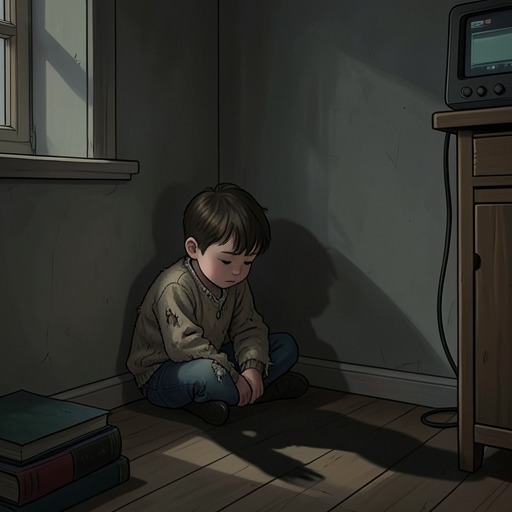
Presumed InnocentThe Continuation of Trauma and Abuse is a pattern of inherited outlook and repeated harm that shapes Rusty Sabich’s late reflections on Carolyn Polhemus and on his own life. He cannot identify the precise source of Carolyn Polhemus’s pain, and he does not present suffering as an excuse for what a person does with it. Instead, he imagines a movement from injury to self-protection, from self-protection to harm returned outward, and recognizes that his own deliberate choices belong within the same bleak world he once meant to oppose.
Carolyn Polhemus and Pain Turned Outward
In conversation with Sandy Stern, Rusty Sabich resists reducing Carolyn Polhemus to a single quality or explanation. Although Stern has described her as skillful at using sensuality and influence, Rusty Sabich feels that this account does not fully capture her. His response is not simply a defense of her: it is a shift from judging her conduct to imagining the suffering that might have helped form it. He wonders whether her capacity for feeling had been diminished, then rejects that possibility in favor of a more complicated picture: the feelings were present, but overloaded by her need to find solace for herself.
The spider caught in its own web becomes Rusty Sabich’s image for Carolyn Polhemus’s entrapment in patterns she had helped create. He imagines that she was in torment, while conceding that he can only guess at its causes. He suspects some long-practiced cruelty or abuse from which she meant to escape, but cannot name its source or offer a settled account of her past. That uncertainty matters: the narrative gives his interpretation emotional force without turning it into verified history. His compassion coexists with an acknowledgment that Carolyn Polhemus took pain in and, through self-deception and excuses, sent some of it back into the world.
Roles, Reinvention, and Repetition
Rusty Sabich describes Carolyn Polhemus as having taken on a succession of roles: a glamorous figure, a person associated with causes, a pursuer of passion, and a hard-nosed prosecutor intent on mastering and punishing other people’s violent impulses. He understands these identities as attempts at self-recreation, yet doubts that adopting new roles could change what had formed her. In this account, reinvention is neither wholly false nor sufficient: it may express a genuine wish to escape, while leaving the earlier injury active beneath the new public selves.
The idea that abuse is passed onward gives the pattern its force. Rusty Sabich does not claim that Carolyn Polhemus consciously set out to repeat what had been done to her. Rather, he imagines that pain, self-delusion, and justifications could coexist, allowing someone to return harm to others even while straining against an earlier wound. The pattern is therefore not a simple chain with a known beginning. Its origins remain partly hidden, and the person who suffers can also become a source of suffering. The account holds sympathy and responsibility together instead of allowing either to erase the other.
Rusty Sabich’s Inheritance and Deliberate Choice
The reflection broadens from Carolyn Polhemus to Rusty Sabich’s own inheritance. Approaching forty, he says he can no longer regard the world as unknown or assume that he likes what experience has shown him. He connects his grim outlook to his father, whose soul he describes as maimed by one of history’s great crimes. Rusty Sabich has witnessed cruelty and anger in many forms; as a prosecutor, he meant to oppose the damaged spirit that commits offenses through force. His recognition that this work did not keep him outside the reach of harm breaks the comforting distinction between the person who prosecutes violence and the person drawn into destructive choices.
His examples of misfortune emphasize how suffering is not confined to one dramatic history. A neighbor, Golan Scharf, has a son born blind. Mac and her husband, during a moment of revelry, turn a corner and plunge into a river. Rusty Sabich also reflects on people whose talent or hope seems to diminish as their lives proceed. These observations do not establish a common cause for every loss, nor do they make every hardship equivalent. They show the accumulation through which his outlook has become darker: lives differ in the shape of their miseries, while pleasures seem comparatively rare and mild.
Against this landscape, Rusty Sabich acknowledges that his pursuit of Carolyn Polhemus was deliberate, not an accident. In the conversation with Barbara Sabich that follows, he begins to speak about the reasons behind a killing and apologizes to her. The placement connects his private responsibility to the preceding reflection without claiming that the reflection supplies a complete explanation. He can name the choice he made and attempt to account for the forces around it, while admitting that no one can fully comprehend the mixture that leads one person to kill another.
The Limits of Explanation
The concept’s central tension is between inheritance and agency. Rusty Sabich sees cruelty as something that can shape later conduct, and his account of Carolyn Polhemus presents self-reinvention as an incomplete escape from earlier harm. Yet he does not describe the past as a mechanical cause that determines every later act. Carolyn Polhemus’s origins remain unknown to him; his own history does not absolve him. The effort to understand becomes a way to face complexity, not a substitute for acknowledging consequence.
The narrative also makes the act of speaking part of this reckoning. Rusty Sabich has promised himself that certain things would remain unspoken, but, looking at the wall, he begins to tell Barbara Sabich what he has been trying to understand. His confession follows an inward movement from sorrow for Carolyn Polhemus, through speculation about the pain she carried, to recognition of his own deliberate conduct. The movement does not resolve the mystery of where every wound began or undo the harm that followed. It makes the continuity visible while preserving the difference between understanding a pattern and being free of responsibility for one’s place in it.